Interfaith Vigil Held in New York to Protest Violence Against Religious Minorities in Bangladesh: Candles Lit in Jackson Heights to Honor Victims and Call for Unity
Pragna News Desk:
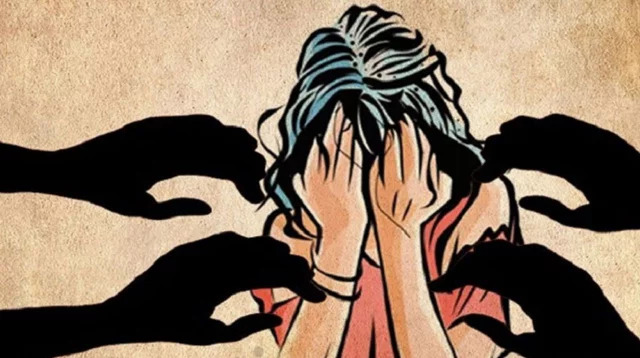
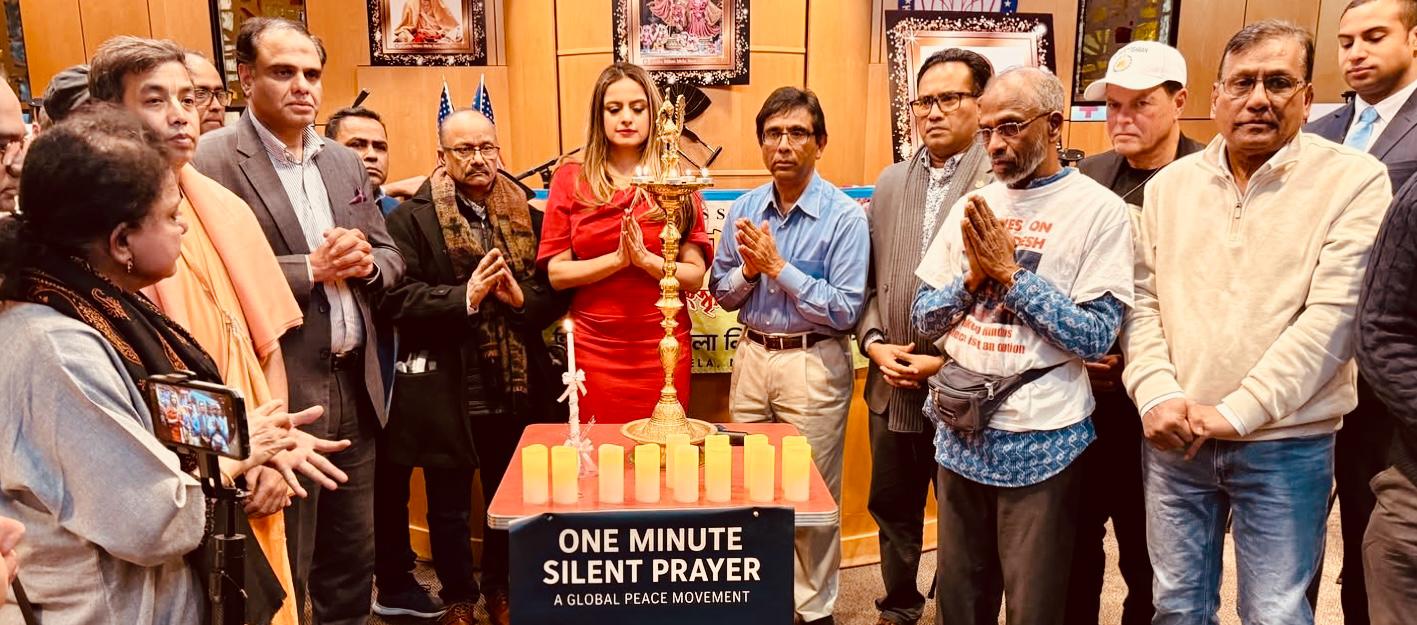
Braving freezing winter temperatures, members of diverse faiths and communities gathered in Jackson Heights, New York, for an interfaith memorial vigil to honor victims of ongoing violence against religious minorities in Bangladesh, particularly members of the Hindu community.
The vigil was held on Sunday evening, February 1, 2026, at the Jewish Center in Jackson Heights and brought together representatives from various religious, ethnic, and civic groups. The event was part of a nationwide awareness campaign spanning more than 20 cities across the United States, organized by Kohna and Hindu Action.

Local coordination for the New York program was led by Shuvo Roy, advisor to Hindu Action, and community activist Pankaj Mehta. Organizers noted that the vigil was originally planned as an open-air gathering at Times Square but was relocated to Jackson Heights due to severe cold weather. Despite the conditions, attendance reflected strong interfaith and community solidarity.
Religious leaders from Hindu, Muslim, Jewish, Sikh, Jain, Buddhist, and Christian traditions addressed the gathering. Andre Fadel, representative of the global peace organization HWPL, emphasized that interfaith unity is essential to protecting human dignity and preventing violence worldwide.

Hansa Rupa Das, President of ISKCON New York, highlighted compassion, justice, and moral responsibility as core values shared across faiths. Muslim community leader Suraiya Deen strongly condemned violence committed in the name of religion, stating that no faith condones hatred or killing.
A message from the Jain community, read by Charul Kothari, underscored the principles of nonviolence and mutual respect. Sikh leader Kamal Puri spoke of the Sikh tradition of standing firmly for justice and defending the oppressed.
The vigil was attended by New York State Assembly Member Jennifer Rajkumar, who expressed deep concern over reports of minority persecution in Bangladesh. She condemned the violence and pledged to raise the issue within the New York State Assembly and broader public forums. Rajkumar voiced her hope for a peaceful, inclusive, and pluralistic Bangladesh.

A central moment of the program involved the reading aloud of the names of those killed in acts of violence. For each name, candles were lit, followed by moments of silence—creating a powerful and emotional atmosphere among attendees.
Interfaith organizer Pankaj Mehta stated:
“This vigil is not only about remembrance. It is a clear message. On February 9, we will bring these concerns directly to the U.S. Congress through a Congressional briefing on Capitol Hill.”
Also in attendance were Dwijen Bhattacharya, President of the Bangladesh Hindu Buddhist Christian Unity Council and noted academic; Dr. Dilip Nath, Democratic Party District Leader; and community leaders Shitangshu Guha and Bidyut Sarkar, among other social and political figures. Support from the Indian diaspora was coordinated by Satya Senapati.

Speakers collectively emphasized that the safety and rights of religious minorities are not merely internal matters of any single nation, but fundamental issues of human rights and global justice. They called upon the international community to take meaningful and effective action.