
The Hague Reviews Escalating Human Rights Violations Against Religious Minorities in Bangladesh
Progga News Desk:
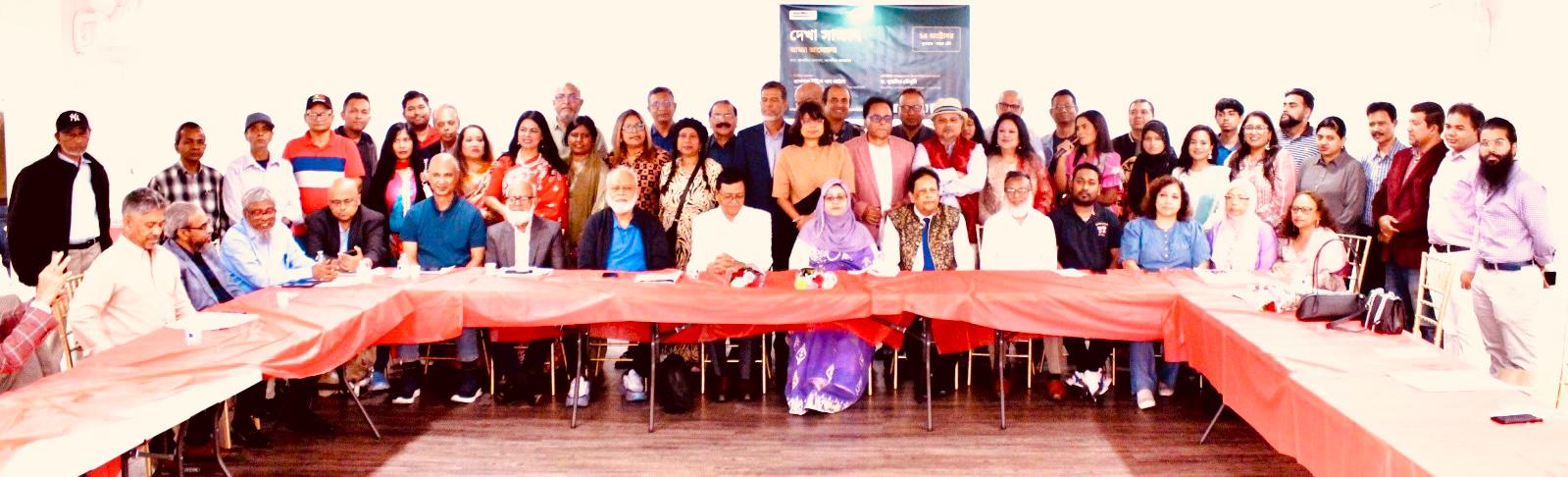
An international human rights conference held in The Hague has examined the escalating crisis faced by religious minorities in Bangladesh, highlighting patterns of violence, impunity, and institutional failure. The conference was convened by Global Human Rights Defence (GHRD) and brought together policymakers, academics, journalists, human rights advocates, and civil society representatives from multiple countries.
Participants discussed the growing incidence of mob violence triggered by allegations of blasphemy, which has led to killings, arson, forced displacement, and the systematic erosion of fundamental rights. Speakers emphasized that these incidents raise serious concerns under international human rights law, including violations of the rights to life, personal security, property, and freedom of religion or belief, as well as the obligation of states to prevent, investigate, and punish communal violence.

The conference opened with a keynote address by Dr. Anthonie Holslag, who analyzed the relationship between blasphemy laws, communal violence, and what genocide scholars describe as “creeping genocide.” Drawing on comparative and historical analysis, he warned that legal frameworks combined with institutional inaction can enable cycles of impunity, allowing targeted violence against religious minorities to persist over time without accountability.
Discussions examined Bangladesh’s legal and institutional environment, noting the growing gap between the country’s constitutional commitments to secularism and equality and the lived reality of minority communities. Speakers highlighted how blasphemy-related provisions, along with broader security and property laws, have often been applied in ways that facilitate impunity rather than protection. Administrative practices were also cited as contributing to dispossession, prolonged detention without due process, and restricted access to justice.
The role of media and digital platforms in shaping public narratives around violence against religious minorities was another central focus. Panelists noted that misinformation and the rapid circulation of unverified allegations—particularly on social media—have contributed to the escalation of mob violence. They also pointed to disparities in international media coverage, observing that incidents affecting religious minorities in Bangladesh frequently receive limited or inconsistent global attention, weakening international awareness and response. At the same time, speakers underscored the growing importance of independent journalism, civil society documentation, and diaspora-led advocacy in countering silence and denial.

The international dimension of accountability was addressed through discussions on the roles of the United Nations, the European Union, and national governments. Participants presented documented patterns of violence, displacement, and institutional breakdown, stressing that these developments raise concerns under multiple international legal instruments, including the Universal Declaration of Human Rights and core human rights treaties. While acknowledging political and economic constraints, speakers emphasized the need for consistent monitoring, credible data collection, and principled engagement that avoids the selective application of human rights standards.
The conference was moderated by former Dutch parliamentarian Harry van Bommel, who guided discussions across three panels and facilitated exchanges among participants. Contributions were made by Paulo Casaca, Dr. Habibe Millat, Priyajit Debsarkar, Andy Vermaut, Nawin Ramcharan, Dina-Perla Portnaar, Prof. Chandan Sarkar, Fareed Ahmad, and Rahman Khalilur Mamun, reflecting a wide range of professional and regional perspectives.
In the closing address, Wiktoria Walczyk, Head Coordinator of Global Human Rights Defence, emphasized the widening gap between Bangladesh’s constitutional guarantees and the lived realities of religious minorities. She called for sustained international attention grounded in evidence, accountability, and the effective application of international human rights law.
Participants concluded that the protection of religious minorities in Bangladesh is not solely a domestic issue but a matter of international human rights responsibility. By bringing together legal analysis, empirical evidence, and firsthand testimony, the conference contributed to a clearer understanding of the patterns of violence affecting minority communities and the obligations of states and international actors to respond in line with international human rights standards.