Tarique Rahman’s Return and Battle for Bangladesh
DEEPAK KUMAR ACHARJEE:
The return of Bangladesh Nationalist Party (BNP) acting chairman Tarique Rahman to Dhaka on December 25, 2025, after nearly seventeen years in exile, marks one of the most consequential moments in the country’s turbulent political history. It is not merely the homecoming of a political leader; it is the re-entry of a decisive actor into a political arena defined by uncertainty, fractured institutions, and an unresolved struggle over the future character of Bangladesh.
Rahman’s arrival—met by massive crowds, heightened security, and intense international media attention—has instantly reshaped the political equation ahead of the February 12, 2026 national election. For supporters of the BNP, his return signals revival and consolidation. For critics, it raises difficult questions about accountability, governance, and coalition politics. For Bangladesh itself, it underscores the fragility of a transition still searching for stability.
A Political Vacuum and a Polarised Transition
Bangladesh is navigating a rare and precarious interregnum. The ouster of former Prime Minister Sheikh Hasina in August 2024, following a student-led uprising, ended more than two decades of Awami League dominance. The subsequent political vacuum has yet to be filled by durable democratic institutions. Instead, power has shifted unevenly among an interim administration, emboldened opposition forces, and ideological actors seeking to redefine the state’s political direction.
The Awami League’s effective exclusion from the upcoming election, through bans and the exile of senior leaders, has fundamentally altered the competitive landscape. With the ruling party absent, the BNP stands as the most nationally organized political force capable of forming a government. In this context, Tarique Rahman—long portrayed as a political heir in waiting—has emerged as the party’s undisputed center of gravity and, by extension, a leading prime ministerial contender.
International media outlets have largely framed his return as a turning point rather than a rupture. Rahman’s initial public messaging—emphasising unity, peace, and democratic rebuilding—appears designed to reassure both domestic audiences and foreign observers wary of renewed instability. The overturning of his earlier legal convictions following the fall of the previous government has further cleared the path for his political rehabilitation, though debates about past governance and accountability persist.
Elections Under Strain
The February 2026 election is widely regarded as a referendum not only on leadership, but on the future political order itself. Bangladesh’s electoral history is deeply scarred by boycotts, contested mandates, and street violence. Recent months have already seen sporadic protests, political intimidation, and attacks on media outlets—warning signs that the transition remains fragile.
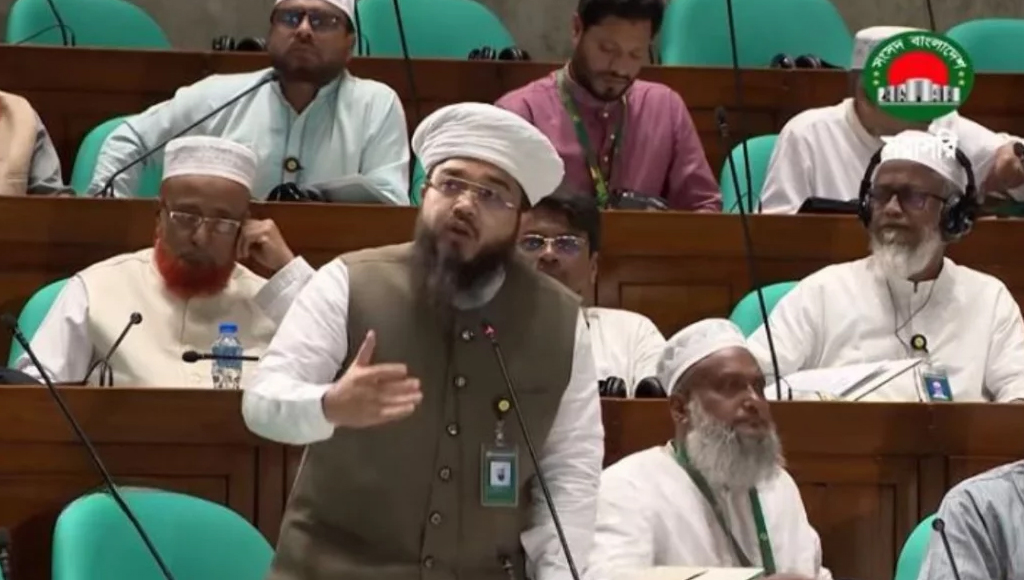
The absence of the Awami League has also opened space for Islamist parties, most notably Jamaat-e-Islami, to expand their influence. While Jamaat alone may not command a national majority, its organizational discipline and ideological clarity give it leverage in a fragmented parliament. This has fueled concern among secularists and international partners about the possible emergence of an Islamist bloc capable of shaping legislation, social policy, and foreign relations.
Crucially, there is no verified evidence from credible national or international sources that Jamaat-e-Islami poses a direct physical threat to Tarique Rahman. The more realistic risks lie elsewhere: coalition bargaining, street mobilization, and the destabilizing effects of disputed electoral outcomes.
BNP–Jamaat: Cooperation or Containment?
The BNP’s relationship with Jamaat-e-Islami remains one of the most sensitive variables in the current political equation. Jamaat leaders have publicly welcomed Rahman’s return while signaling that they will closely observe his political direction. Analysts correctly note that Jamaat could function either as an electoral ally or as a competitor seeking to extract concessions.
History offers cautionary lessons. Coalition politics in Bangladesh has often been transactional, volatile, and at times violent. While large-scale political assassinations have become rarer in recent years, the potential for mass unrest—particularly if ideological red lines are crossed—remains high. For the BNP, the strategic challenge will be to consolidate power without becoming hostage to forces that could alienate centrist voters and international partners.
The Interim Government and Democratic Credibility
The interim administration, led by Nobel laureate Dr. Muhammad Yunus, was tasked with steering Bangladesh toward free and credible elections. Yet it has faced criticism over media restrictions and political repression, raising concerns that the transition itself may be un
dermining democratic norms. Without transparent electoral processes and institutional neutrality, even a decisive BNP victory risks being contested at home and questioned abroad.
Regional and Global Stakes
Bangladesh’s internal politics do not unfold in isolation. India, long accustomed to close ties with the Awami League, is recalibrating its approach, prioritizing border stability and seeking to prevent radicalization along its eastern flank. China remains focused on safeguarding its infrastructure investments, largely avoiding overt political involvement. Pakistan, constrained by history and limited leverage, plays only a marginal role.
What Lies Ahead for Tarique Rahman—and Bangladesh
Based on available evidence, Tarique Rahman’s most likely near-term fate is political, not personal. He is poised to lead the BNP into the February election with a strong chance of forming the next government, should the process be broadly accepted as fair. His return has undeniably stabilized BNP leadership after years of fragmentation.
Yet the challenges are formidable: managing street-level unrest, navigating Islamist pressures, reassuring foreign partners, and rebuilding institutions hollowed out by years of polarized rule. The real danger lies not in unverified assassination threats, but in systemic instability—disputed elections, fractured alliances, and the erosion of public trust.
Bangladesh now stands at a crossroads. Tarique Rahman’s return offers an opportunity to reset politics, but also a test of whether leadership can rise above zero-sum rivalry. The coming months will determine not just who governs Bangladesh, but whether the republic can reclaim a democratic equilibrium that has long remained elusive.
The writer is Editor and Publisher of The South Asian Times